8 unique facts about twins
15/2/2020
5.526 Visualizaciones
The number of twins in the world is multiplying every year, but many people are still unaware of the most incredible facts about them. Let's gain new knowledge and destroy some common myths about twins.
#1 Twins are more likely to be left-handed

In general, left-handedness occurs in about 10% of the human population, but when it comes to twins (both identical and non-identical), about 20% of them are left-handed. Twins don't always have the same handedness – approximately 20-25% of identical twin pairs have different hand preferences.
#2 Twins can have different dads

The phenomenon in which different ova from the same cycle are fertilized by different fathers is called heteropaternal superfecundation. It's quite common in such animals as cats and dogs and rare but possible in humans. Since the 1980s, about 5 cases have been officially documented worldwide.
#3 Twins interact with each other in the womb
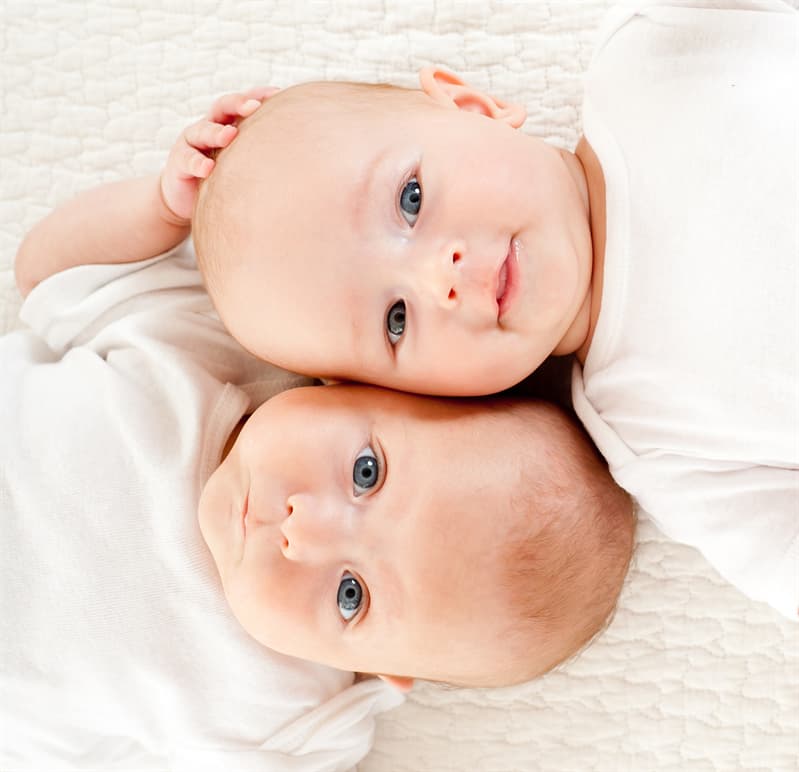
According to several researches, twins in the womb start "communicating" with each other by the 14th week of gestation. Fetuses display movements directed towards their co-twin and by 18 weeks they are usually seen to touch their brother or sister more often than they touch their own bodies.
#4 40% of twin babies invent their unique language
This unbelievable phenomenon is called cryptophasia. For each other, twins act like models for language development, that's why they use the sounds or onomatopoeic expressions only the two of them can understand.
#5 Identical twins do not have identical fingerprints

Identical twins are genetically closer than non-identical siblings, but when it comes to fingerprints, they are not based on DNA. Even if the babies start out with identical fingerprints, the unique lines and ridges on their fingers form as they begin to move their hands in the womb.
#6 Women in their 30s are more likely to have twins
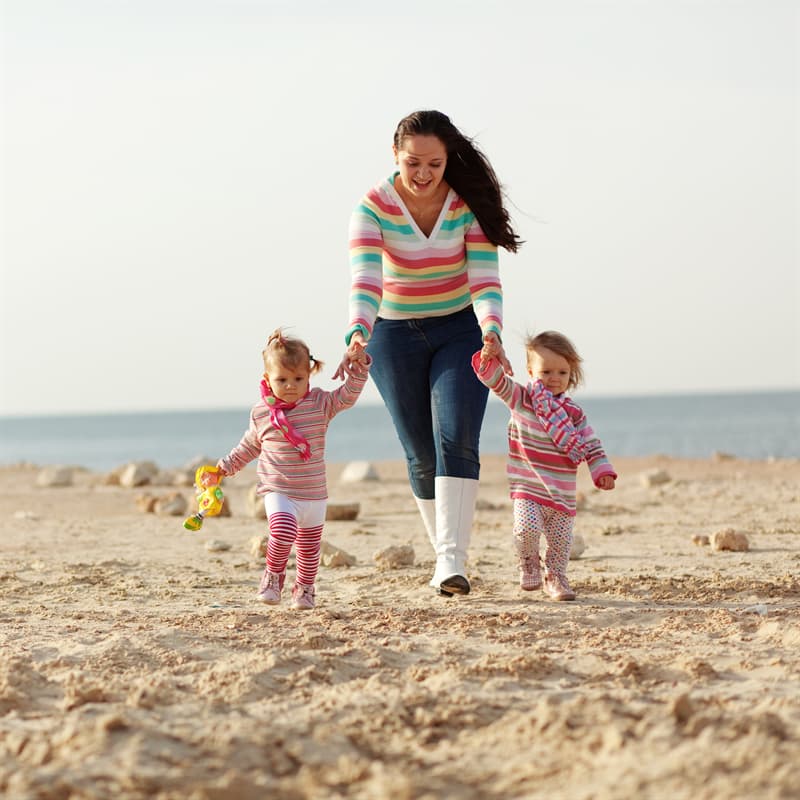
A 2006 study showed that women aged 35 and older are more likely to have more than one egg during one menstrual cycle. They also have higher levels of follicle-stimulating hormone. Women aged 30-35 are less likely to conceive twins, while women aged 24-30 showed the least likelihood.
#7 There is a village in Ukraine where 122 twins live
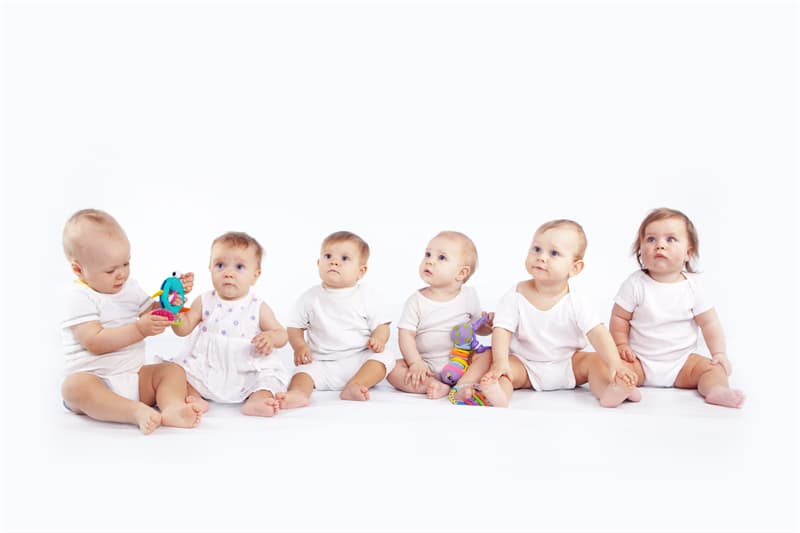
61 pairs of twins now live in Velikaya Kopanya, Zakarpattia Oblast, Ukraine. The total population of the village is less than 4,000! This peculiar baby boom began in 2004, and at least two or three pairs of twins are born there every year. The village has already made it to the Ukraine’s record book and may soon enter the Guinness Book of Records.
#8 Twins can be born months apart

It usually happens when mom has a double uterus, so the twins are developing independently. The odds of this happening are just one in 50 million, but several cases have been reported. In 2019, Liliya Konovalova, a 29-year-old woman from Kazakhstan, gave birth to a girl after only 25 weeks of pregnancy. As Liliya joked, her son was in "no rush" – he arrived only 11 weeks later. When the time came to go home, both babies were feeling great and weighed slightly under 10lbs (4.5 kg).
Did this information surprise you? Are you a twin? Or are there twins in your family?
Tell us in the comments!
SHARE this article with everyone who is interested in SCIENCE
¿Tienes algo que decir?
44 Comments
Corinne Rainsforth
I have identical twin sons. They are 47 years old. Different finger prints tho. Even at this age their close friends have trouble telling them apart. They did have their own language. Both olympians in the sport of Judo, one is now a family doctor with a specialty in sports med, the other is a police sergeant.

Steve Tingle
My daughter in her 30s had non-identical twins (one of each) , first twins in my family though as only one of the previous generation (my aunt) is still alive but I've never heard of any. The little girl is a lefty, and mentally ahead of her brother, though she is physically smaller, but he is big for his 2.5 years, he's no slouch though and seems to be following his father and great grandfather possibly into engineering. And the girl has been heard teaching him new words, unfortunately the ruder ones.

Tonia Russell
I have 27 year old identical twin daughters

Anita Clark Morton
I have identical twin cousins. When my uncle wanted one of them, he'd just call out TWIN. Even he couldn't tell them apart as babies. As they got older, different personalities emerged. Penny was quiet and shy. Pat was always talking. But they were totally devoted to each other.

Betty Wiendels
inakatehornaman, My sister Maria and brother John are also twins and almost 60 yrs old.

rrb rb
My twin brother and I look nothing like each other. However our younger brother and I could pass for twins. Weird?

lls
...did not know about identical twins not having identical fingerprints...interesting!

garrett scott
Cryptophasia is not unbelievable. It is believable. It has been observed and commented upon for at least half a century. It is also known to occur between or among siblings who are isolated from other children. In the commentary on handedness two different percentages are given though they overlap. Is this a result of citing different studies?
Dora Diaz
Interesting facts. Thank you for this information

Leticia Olsen
🙏🏼Thanks for sharing!! I love twins!!💞

Rachel Costa
I might add that they were large for twins. 8lb 7 oz and 8 lb 8oz. 19 1/2” and 20 1/2” one boy one girl. Boy ambidextrous... girl right handed
Rachel Costa
I have fraternal grand twins. They had their (twin Talk) the only word we figured out was Dindon. Meant... Big truck... they are now 15 and have no recollection of their own language

Janis Woolsey
I've always been fascinated by twins and this article was excellent.....

Adele Dennis
I have identical twins and the twin speech has brought back happy memories for me

Paul Vickers
I’m a twin and We are complete different people, they use to think my younger brother and my twin was the real twins lol.

Cheryl Romano
My twins are 47. I didn’t fit the age fact...I was 23. And I don’t have double uterus. I had one lefty and one is a righty. They are not identical. I think I got pregnant with second when I was already pregnant. And at 40 weeks the first one wanted out from being stuck up under my ribcage, so by C-section the smaller 36 week baby came out first. They did communicate with each other, I know that because at 8 months when one asked me about letters on their wooden blocks, 2 weeks later they both knew it.
Datos interesantes
¿Cuáles son los documentales de Netflix que vale la pena ver?
30/4/2021

No soy comsumidor de Netflix, pero una vez pedí una cuenta para ver un documental:
¿Cuáles son algunos hechos psicológicos que la gente no conoce?
12/6/2021
Bajamos el volumen o lo apagamos cuando estamos conduciendo por locaciones que no son familiares.
¿Cuál fue el último hongo que más te impresionó?
14/5/2021

La del hongo coloquialmente conocido como "dedos de muerto".

¿Por qué el jabón quita la grasa si está hecho de grasa?
5/5/2021
Me hace gracia. Hace un tiempo me pregunté yo eso mismo y, al cabo de un tiempo lo supe.